
 Image 1 of 6
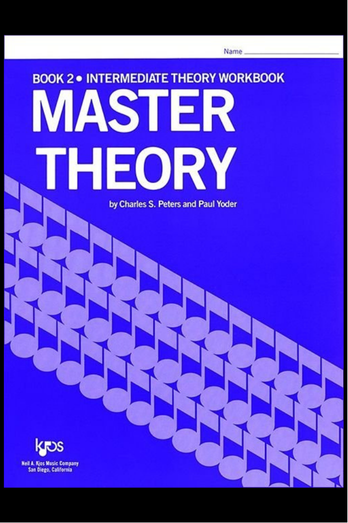 Image 2 of 6
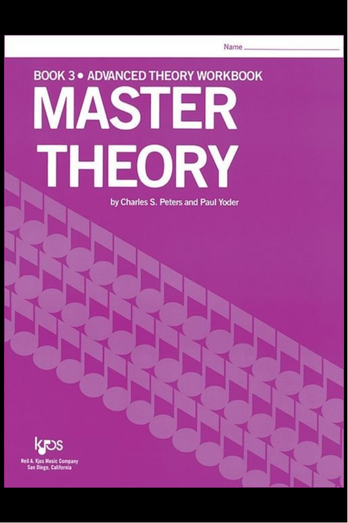 Image 3 of 6
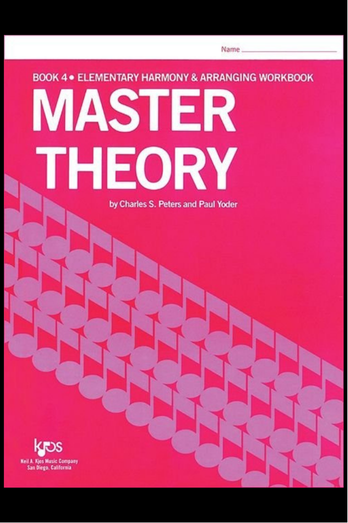 Image 4 of 6
 Image 5 of 6
 Image 6 of 6
-
Master Theory is the most comprehensive theory workbook series available. Life-long music teachers Charles S. Peters and Paul Yoder offer a logical, effective way to teach the essential elements of music to any student.
It's for everyone, and it truly works! General music students, voice students, instrumental students, piano students ... any young musician can build theory skills in this six-level course.
Master Theory is so versatile, it doesn't even require a keyboard! The interactive workbook format makes it ideal for general music classes, performing group rehearsals, or independent study.
There's no comparison. Beginning with staff lines and progressing through rhythms, key signatures, scales, and harmony to elementary counterpoint, it's a comprehensive, no-nonsense approach to theory ... with no distractions! Your students deserve to learn theory in the quickest, most efficient way possible.
-
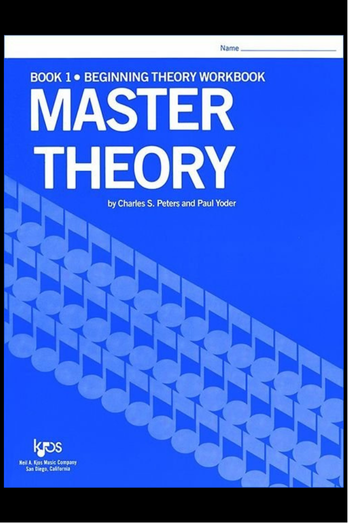
Lessons and Review pages on the Staff, Clef Signs, Line and Space Names, Whole, Half, and Quarter Notes, Measures, Time Signatures of 2/4, 3/4, and 4/4, Note Values and Rest Values, Dotted Notes, Leger Lines, Repeat Signs, 1st & 2nd Endings, Ties, Slurs, Eighth Notes and Rests, Dotted Quarter Notes, Flats, Sharps, Naturals and Accidentals.
-
Lessons and Review pages on Key Signatures, Flat and Sharp Keys, Sixteenth Notes and Rests, Dotted Eighth Notes, Alla Breve, Intervals, Whole and Half Steps, Tetrachords, Major Scales, Circle of Keys, 3/8, 6/8, 9/8, and 12/8 in Slow and Fast Time, and Syncopation.
-
Lessons and Review pages on Chromatic Scales, Enharmonic Tones, Signs and Abbreviations, Minor Scales, Movable "Do" Syllables, Transposition, Complex Time Signatures, Perfect, Major and Minor Intervals, Augmented and Diminished Intervals, 2-part Harmony, Major Chords, Triads, Scale of Triads, Dominant 7th Chords, and Conducting.
-
Lessons and Review pages on Triads, Harmonizing with Chords, Passing and Neighboring Notes, Triads in Arpeggio Form, the Subdominant Triad, Dominant Seventh Chord, Melody Writing, Harmonizing Melodies, Harmonizing Major and Minor Chords, and Recognizing Minor Chords.
-
Lessons and Student Assignments on Chord Positions, Chord Inversions, Four-Part Writing, Arranging for Voices, Secondary Chords, Transposing Instruments, Arranging for Brass, Woodwinds, and Piano.
-
Lessons and Student Assignments on Arranging for Voices, Transposing Instruments, Form in Music, Cadences, Non Harmonic Tones, Simple Modulation, Military Marches, Dominant Ninth Chord, The String Selection, Key Relationships, and a Chord Chart.